


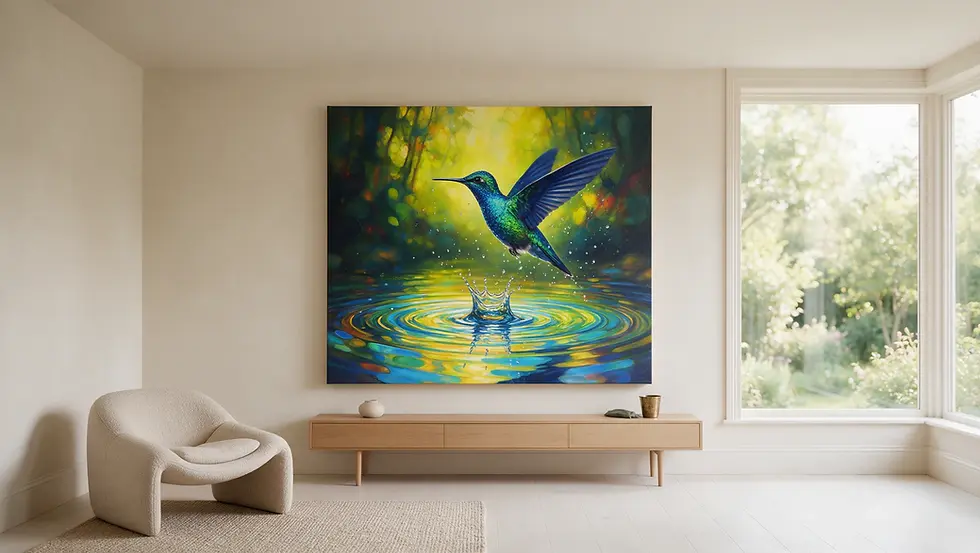


The Perfect Palette: How to Match Canvas Wall Art to Your Room Colors With AI
Learn how hex-informed AI prompts, room-color references and palette calibration can help you find canvas wall art that harmonizes with your paint, furniture and décor.


How AI Prompt Engineering Creates Entirely New Wall Art Styles
Discover how AI prompt engineering blends familiar subjects, art movements, color, texture and lighting to create original canvas wall art styles beyond conventional mass-market décor.


Can You Hang Canvas Wall Art in a Bathroom With a Shower?
Yes, canvas wall art can hang in a bathroom with a shower—but only on a well-ventilated dry wall beyond direct spray, sink splashes and recurring condensation. Learn where it belongs and how to protect it.


Why Do Canvas Prints Look Different on Screen vs. in Person?
Canvas previews can appear brighter or more saturated than finished wall art. Learn how screen settings, emitted light, canvas texture, viewing conditions and room illumination shape the color, contrast and detail you see in person.


How to Hang Large Canvas Wall Art Without Damaging the Wall
Learn how to hang large canvas wall art without drilling by using properly rated picture-hanging strips or adhesive hooks, including surface preparation, weight limits, framed-canvas guidance and safer installation steps.


0.75 vs. 1.25 Inch Canvas Depth: What Is the Difference?
Compare 0.75- and 1.25-inch canvas depths, learn why the slimmer profile works well with frames and choose the right gallery wrap for your wall.


Room Lighting & Canvas Color Shift: How Light Affects Canvas Wall Art Colors
Learn how daylight, bulb temperature, CRI and glare affect canvas wall art colors—and how to keep your artwork looking accurate throughout the day.


Complementary Color Contrast Strategy: How to Make Canvas Wall Art Pop
Learn how complementary color contrast makes canvas wall art pop while balancing blue-orange, red-green and yellow-purple palettes throughout your room.


Monochromatic Canvas Wall Art: How to Style Tonal and Minimalist Art
Monochromatic canvas wall art creates depth through shades, tints, tones and texture rather than multiple competing colors. Learn how to style tonal and minimalist artwork with walls, furniture, lighting and natural materials so every room feels cohesive, dimensional and intentionally designed.


Warm and Cool Color Palettes in Wall Art: How They Shape Room Psychology
Warm and cool canvas colors can change how energetic, welcoming, calm or spacious a room feels. Learn how to match artwork temperature with each room’s purpose, lighting and undertones while creating a balanced home that feels comfortable and intentional.


Canvas Curation: Choosing Canvas Wall Art for Neutral Walls
Learn how to choose canvas wall art for beige, gray, greige and white walls by matching undertones, balancing contrast and selecting colors that create a polished focal point.


The Proportional Design Trend: Using the 60-30-10 Design Rule for Canvas Wall Art Color
Learn how to use the 60-30-10 rule to choose canvas wall art that connects your room’s dominant, secondary and accent colors without making the décor feel overly matched.


Canvas Weight and GSM: Textile Density Standards for Wall Art
Learn how canvas weight, GSM, textile density and weave affect strength, texture and print quality—and why 344 GSM suits premium residential wall art.


Canvas vs Framed Art—Which Is Best for Your Home Style?
Compare canvas and framed art by style, scale, texture, glare and visual weight, then discover why gallery-wrapped canvas fits so many modern homes.


Canvas Edge Finishing Options — Gallery Image Wrap vs. Mirrored vs. Solid Color
Compare gallery image wrap, mirrored and solid-color canvas edges to learn which finish preserves the composition, continues the artwork or coordinates cleanly with your room.


Inside a Gallery-Wrapped Canvas —Construction & Craftsmanship
Discover how solid wood stretcher bars, square corners, balanced canvas tension and secure fastening create durable canvas wall art that resists warping and sagging.


Giclée Printing and Archival Pigment Inks: Why They Matter
Archival pigment inks paired with high-definition giclée printing help canvas wall art retain vivid color, rich blacks, fine details and smooth tonal transitions for decades. Learn why this museum-grade process matters when choosing artwork for your home.


Choosing the Right Poly-Cotton Canvas: Cotton vs. Polyester Compared
Compare cotton, polyester and poly-cotton canvas materials to learn why a blended weave offers the best balance of natural texture, vivid color, dimensional stability and lasting durability for residential wall art.


Professional Home Office Wall Art: Style, Placement and Focus
Learn how to choose and position canvas art for a professional home office using controlled color, comfortable scale, clear sightlines and a polished video-call backdrop.


Entryway and Hallway Art: How to Decorate Narrow Spaces
Learn how to decorate narrow foyers and long hallways with correctly scaled canvas art, coordinated color, consistent spacing and intentional visual rhythm.


Bathroom Canvas Wall Art: Humidity, Placement and Care
Learn how to display canvas wall art in bathrooms using effective ventilation, dry-zone placement and protection from direct water, persistent condensation and excessive humidity.


Dining Room and Kitchen Wall Art Curation: How to Choose and Position It
Learn how to select and position canvas wall art for dining rooms, kitchens and breakfast nooks using subject, color, furniture scale, safe placement and room-specific styling.


How to Choose the Best Canvas Wall Art for a Bedroom
Learn how to choose the best canvas wall art for a bedroom using calming subjects, gentle color palettes, balanced dimensions and restful placement. Create an above-bed focal point that feels personal without disrupting the room’s quiet atmosphere.


How to Choose the Best Canvas Wall Art for a Living Room
Learn how to choose the best canvas wall art for a living room by balancing artwork size, subject, color and placement. Use these focal-point curation rules to connect your canvas with the sofa, architecture and overall room design.


Grid Gallery Wall Spacing: How to Arrange and Align Multiple Canvases
Master grid gallery wall spacing with uniform 2–3-inch gaps, aligned rows and a balanced outer perimeter. These simple formulas help you plan, center and hang a polished multi-canvas display.


Complex Structural Wall Art Alignment: How to Hang Art Along a Staircase
Learn how to hang wall art along a staircase using consistent center heights, diagonal alignment and balanced spacing. This practical guide explains how to measure, plan and arrange canvas prints for a cohesive staircase gallery wall.


Oversized Wall Art Sizing for Large Blank Walls: The 60–75% Rule
Use the 60–75% rule to size oversized canvas wall art for large blank walls, calculate the ideal width and preserve balanced negative space.


Triptych and Multi-Panel Canvas Spacing: The 2–3 Inch Rule
Learn the 2–3 inch rule for triptych and multi-panel canvas spacing, calculate total display width and hang every canvas evenly.


Standard Eye-Level Art Alignment Math: The Correct Height to Hang Canvas Wall Art
The correct height for hanging canvas wall art on an open wall is 57 inches from the finished floor to the artwork’s center. This reliable eye-level standard creates a comfortable viewing position and helps separate artworks, coordinated sets and gallery walls maintain consistent alignment throughout your home. Instead of measuring to the canvas’s top or bottom edge, locate its vertical center and use that point as your 57-inch reference. A broader 57-to-60-inch range can acc


Furniture Scaling Rules for Wall Art: How Wide Should Canvas Art Be Above a Sofa or Bed?
Canvas art should generally measure about 60% to 75% of the width of the sofa or bed beneath it. This proportion connects the artwork to the furniture, establishes a balanced focal point and prevents a beautiful canvas from appearing undersized or visually disconnected. For example, artwork above an 84-inch sofa should measure approximately 50 to 63 inches wide. Above a 76-inch king bed, aim for a canvas or coordinated grouping about 46 to 57 inches wide. These furniture scal


How to Mix and Match Wall Art Styles Cohesively
Mix different wall art styles by repeating at least one unifying visual element across every piece. A shared color, shape, subject, line quality or mood can connect abstract, botanical, landscape, minimalist and vintage-inspired artwork without making the room feel mismatched. Start with one dominant artwork that establishes the room’s visual direction. Then choose supporting pieces that repeat two or three of its colors while introducing different subjects or techniques. A g


2026 Canvas Wall Art Trends & Themes
Canvas wall art trends for 2026 are moving beyond cold minimalism and generic matching décor. This year’s strongest looks combine warm earth tones, nature-inspired subjects, expressive pattern, layered visual texture and artwork with enough scale to shape the entire room. Clay red, moss green, ochre, chocolate brown, deep teal and creamy neutrals lead the color direction, while burgundy, muted pastels and metallic-inspired accents add personality. Organic abstracts, atmospher


Rustic Farmhouse & Botanical Wall Art Curation
Rustic farmhouse wall art should bring warmth, nature and collected character into a room without relying on predictable signs or overly distressed décor. The strongest selections combine organic subjects, earthy colors and timeless artwork with the relaxed materials already found in farmhouse interiors. Botanical studies, pastoral landscapes, vintage-inspired florals, wildlife imagery and understated neutral abstracts can all complement reclaimed wood, linen, stone, wicker a


Coastal and Beach Theme Wall Art Rules
Coastal wall art should make a room feel open, relaxed and naturally connected to the water—not crowded with predictable nautical décor. The most inviting coastal interiors capture the atmosphere of the shoreline through ocean-inspired colors, expansive scenery, organic textures and artwork with visual breathing room. Whether you are decorating a bright living room, restful bedroom, welcoming entryway or beach house, the right canvas can establish a seaside mood without overw


Minimalist Wall Art & Line Work: How to Curate a Calm, Modern Room
Minimalist wall art creates visual impact through restraint. Clean line work, simplified shapes, intentional negative space and carefully limited color palettes give a room personality without overwhelming its architecture, furniture or natural light. Although minimalist artwork is often associated with black-and-white drawings and neutral abstracts, it can also incorporate warm earth tones, muted color fields and subtle organic forms. The right minimalist canvas can make a b


Welcome Fall to Every Wall: Seasonal Decorating Ideas for a Warmer Home
Refresh your home for fall by introducing warmer colors, layered natural textures and seasonal wall art that makes each room feel more inviting. You do not need to replace your furniture or completely redesign your interior—a thoughtfully chosen canvas, coordinated throw pillows and a few autumn-inspired accents can create a noticeable seasonal transformation. The most effective fall decorating ideas build upon the colors and character already present in your home. Rich terra


How to Choose Abstract Canvas Wall Art for Modern Interiors
Learn how to choose abstract canvas wall art by balancing color, scale, composition and placement within a modern interior.


Comments